PCB & SMT Solder Reflow Labeling Materials
Technical guide for electronics contract manufacturers (EMS) and hardware engineers. Compare 300°C high-temperature polyimides (B-652, B-724), flux wash resistance, and 600 DPI micro 2D DataMatrix barcode printing.
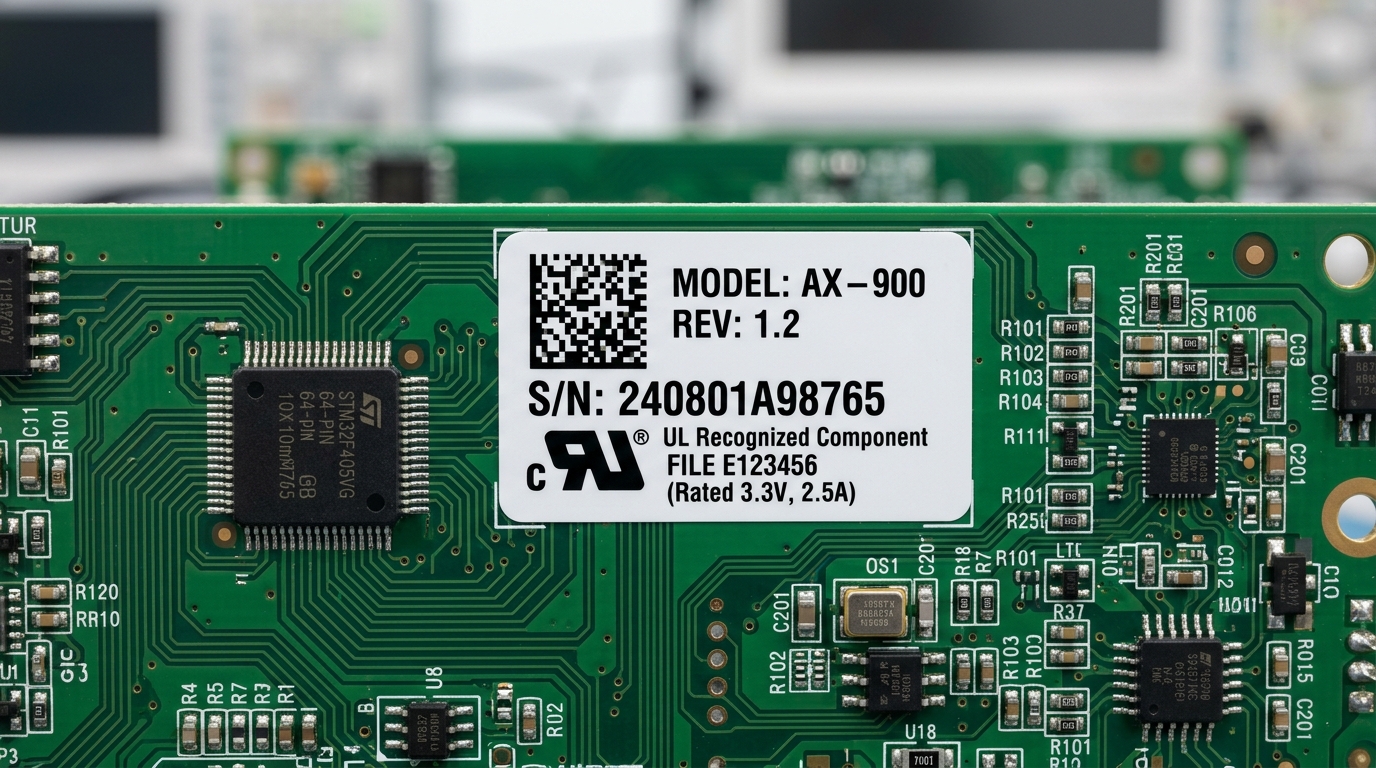
Primary Electronics & PCB Material Options
High-Temperature Polyimide (Kapton® Alternative)
Gloss Amber/Yellow Polyimide with Permanent Acrylic AdhesiveThe premier material for through-hole top/bottom wave soldering and SMT reflow. Survives harsh aqueous and semi-aqueous defluxer washes, saponifiers, and infrared reflow profiles without yellowing or peeling.
High-Temperature Amber Polyimide
Ultra-Thin Matte Amber Polyimide FilmUltra-thin profile engineered for tight-tolerance automated pick-and-place PCB labeling lines. Exceptional contrast with 2D micro DataMatrix codes down to 0.125" x 0.125".
Permanent Gloss White Polyester Rating Plates
Biaxially Oriented Polyester with Permanent Acrylic AdhesiveThe electronics industry standard for post-assembly rating plates, serial number barcodes, and MAC address labels placed on housings after the board has exited the solder oven.
Metallized Silver Polyester Rating Plates
Thermal Transfer Printable Metallized Matte Silver PolyesterProvides a stamped aluminum / brushed steel aesthetic for external serial plates, compliance badges, and OEM branding without the cost of stamped metal tags.
Engineering Critical Factors for SMT Labels
Lead-free soldering reaches peak temperatures of 250°C–260°C for 60–90 seconds. Standard polyesters shrink and carbonize; only high-grade polyimides (B-652 / B-724) retain structural integrity and barcode legibility.
Tiny 4mm x 4mm 2D DataMatrix barcodes require 600 DPI thermal transfer engines (such as the Brady i7100 or i5100-600) paired with R6000HF Halogen-Free resin ribbons to ensure 100% scan rates.