Dimethyl Sulfoxide (DMSO) Resistance: Brady Material Ratings
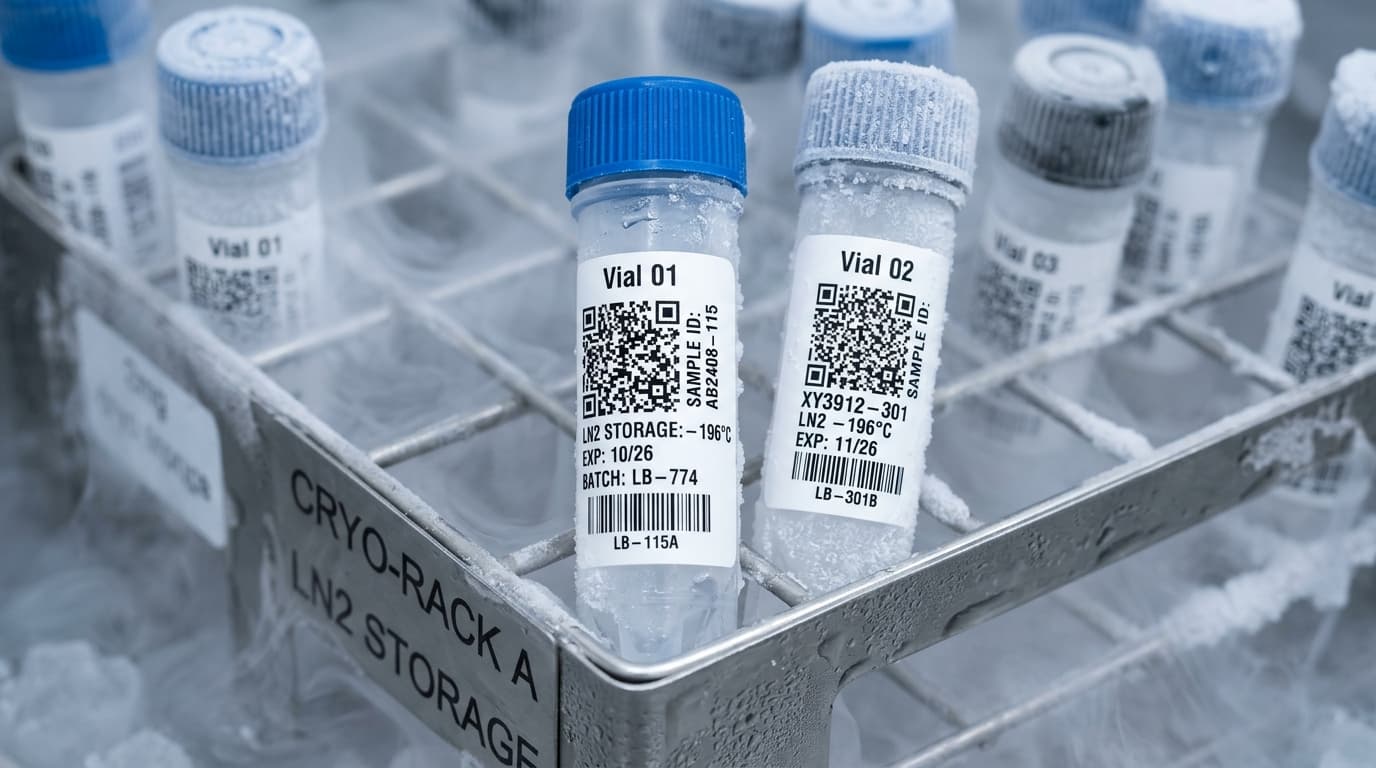
Cryogenic cell banking, biological sample preservation, pharmaceutical synthesis. This engineering guide provides empirical laboratory test ratings for 9 Brady materials evaluated against Dimethyl Sulfoxide (DMSO) for print permanence and adhesive adhesion.
Standard Laboratory Test Protocol
Brady chemical immersion testing follows strict standardized procedures:
- Immersion Cycles: 5 cycles consisting of 10-minute soaks in Dimethyl Sulfoxide (DMSO) followed by 30-minute recovery periods at 22°C (72°F).
- Rub Test: Following final immersion, printed legends are rubbed with a cotton swab saturated in Dimethyl Sulfoxide (DMSO) for 10–20 double rubs under ~1 lb of downward force.
- Adhesive Inspection: Evaluated for edge lift, adhesive softening, ooze, or dissolution from stainless steel panels.
Thermal Ribbon Chemistry Importance
Face stocks like polyester and polyimide resist Dimethyl Sulfoxide (DMSO), but standard wax/resin ribbons will smear or dissolve instantly upon contact.
Laboratory Test Results Table: Dimethyl Sulfoxide (DMSO)
Showing 9 tested materials ranked by solvent survivability score.
| B-Number | Survivability Rating | Substrate & Adhesive Effect | Required Ribbon | Operating Limits | Datasheet |
|---|---|---|---|---|---|
| B-2492 FreezerBondz PolyesterFinish:MatteAdhesive:PermanentAcrylic | Excellent (No Effect) | Tested | Series R6000HF | Standard Industrial | Full Specs |
| B-461 POLYESTER FILM TAPE Polyester | Excellent (No Effect) | Tested | R4300 | -70.0°C to 130.0°C | Full Specs |
| B-481 StainerBondz(TM) PolyesterFinish:SatinwhiteAdhesive:Permanentacrylic | Excellent (No Effect) | Tested | Series R6000HF | Standard Industrial | Full Specs |
| B-490 Freezerbondz™ Matte White Polyester Thermal Printable Label Stock White polyester | Excellent (No Effect) | No visible effect | Series R6000HF | -196.0°C to 160.0°C | Full Specs |
| B-492 Freezerbondz White Polyester Thermal Printable Label Stock Polyester - white film with white thermal transfer printable topcoat, permanent acrylic adhesive | Excellent (No Effect) | No visible effect | R4300 | -196°C to 110.0°C | Full Specs |
| B-494 B-494 PolyesterFinish:GlosswhiteAdhesive:PermanentAcrylic | Excellent (No Effect) | Tested | Series R6000HF | Standard Industrial | Full Specs |
| B-7425 B-7425 Polypropylene | Excellent (No Effect) | Tested | Series R6000HF | Standard Industrial | Full Specs |
| B-7425J B-7425J Polypropylene | Excellent (No Effect) | Tested | Series R6000HF | Standard Industrial | Full Specs |
| B-8505 B-8505 PolyesterFinish:MatteAdhesive:Permanentacrylic | Excellent (No Effect) | Tested | Series R6000HF | -112.0°C to 130.0°C | Full Specs |
Orderable SKUs for Dimethyl Sulfoxide (DMSO) Environments
Standard catalog rolls, Grainger part numbers, dimensions, and list prices for high-survivability materials.
Frequently Asked Questions: Dimethyl Sulfoxide (DMSO) Resistance
Vinyl (PVC) polymers contain plasticizers that make the film pliable. Aggressive organic solvents like Dimethyl Sulfoxide (DMSO) extract plasticizers from the vinyl matrix, causing the film to swell, wrinkle, and soften the underlying acrylic adhesive. For heavy solvent contact, polyester (B-423) or polyimide (B-652) are recommended.
A wipe-down test simulates routine machine cleaning with a saturated rag for 10–20 rubs. An immersion test submerges the label directly into Dimethyl Sulfoxide (DMSO) for 5 cycles of 10 minutes. Many materials survive wipe-downs without degradation, but continuous total immersion requires specialized crosslinked resin ribbons and chemical-resistant face stocks.