Why Labels Fail on Powder-Coated Metal & LSE Plastics (And How to Fix It)
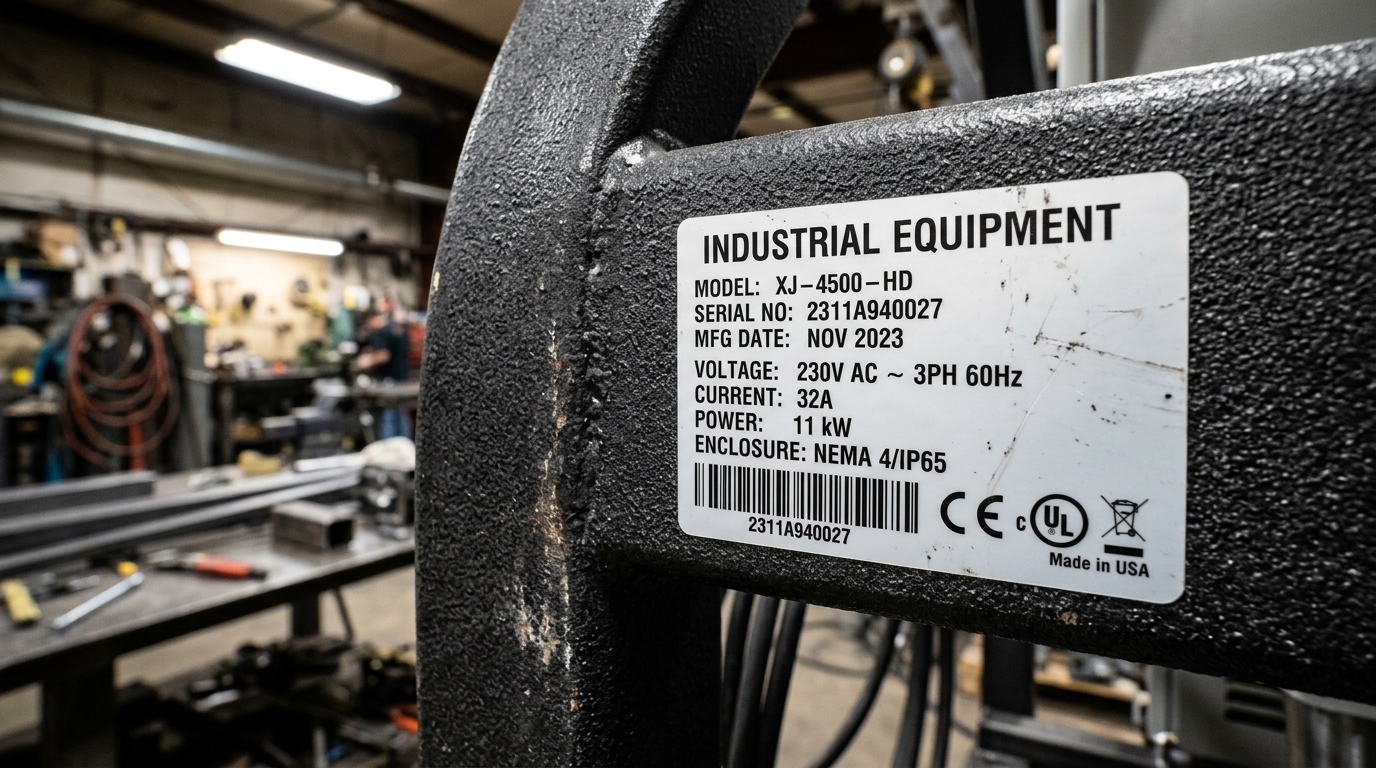
Ever applied a rating plate to an electrical enclosure or chemical tote, only to watch it curl at the edges and fall off hours later? Understand the physics of surface energy (Dynes/cm), microscopic texture voiding, and how Brady B-483A Ultra-Aggressive High-Tack formulations create a permanent bond.
1. The Surface Energy Spectrum (Dynes/cm)
For an adhesive to create a permanent chemical bond, the surface energy of the substrate must exceed the surface tension of the adhesive. When the substrate's surface energy is low, adhesives 'bead up' like water droplets on a freshly waxed car hood:
| Substrate Material | Surface Energy | Adhesive Wetting Behavior | Recommended Brady Material | Bond Difficulty |
|---|---|---|---|---|
| Copper / Stainless Steel (High Surface Energy - HSE) | 1,000+ Dynes/cm | Complete spontaneous wetting. Standard adhesives bond instantly. | Brady B-423 (Permanent Gloss Polyester) | Easiest to Bond |
| Polycarbonate / ABS / Nylon (Medium Surface Energy) | 42 – 46 Dynes/cm | Good wetting. Moderate acrylic adhesives achieve full cure in 24 hours. | Brady B-423 / B-428 / B-499 | Standard Industrial |
| Textured Polyester Powder-Coated Steel | 30 – 34 Dynes/cm | Poor wetting. Orange-peel texture reduces true adhesive contact area by up to 70%. | Brady B-483A (Ultra-Aggressive High-Tack Rubber/Acrylic) | Severe Adhesion Challenge |
| Polypropylene (PP) & Polyethylene (HDPE / LDPE) | 29 – 31 Dynes/cm | Very low surface energy. Standard adhesives bead up and peel effortlessly. | Brady B-483A / B-489A (Matte White) | Severe Adhesion Challenge |
| PTFE (Teflon®) / Silicone Coated Surfaces | 18 – 24 Dynes/cm | Extreme non-stick properties. Standard pressure-sensitive adhesives will not stick. | Specialty Mechanical Tags / B-851 LOTO or Pre-Treated Substrates | Non-Bondable with Standard PSA |
2. The Dual-Failure Mechanism on Powder Coat Panels
Powder-coated enclosures feature an orange-peel, sand-tex, or stipple finish. Standard label adhesives are thin (~0.8 mil thick). When placed on a textured surface, the adhesive only bridges the very tips of the peaks, leaving over 60% of the surface area as unbonded air gaps.
Modern electrostatic powders contain silicones, waxes, and flow agents designed to repel dirt and graffiti. These same chemical additives lower surface energy to 30 Dynes/cm, preventing standard acrylic adhesives from achieving molecular cross-linking.
3. The Solution: Brady B-483A & B-489A Ultra-Aggressive Adhesives
To permanently solve peeling on powder coat, Brady engineered the B-483A (Gloss White) and B-489A (Matte White) polyester series:
Features a thick, cold-flow rubber/acrylic adhesive layer that physically flows into the textured valleys of powder-coated metal within 20 minutes of application.
Delivers more than double the adhesion of standard polyester labels, causing substrate destruction or face-stock tearing before the adhesive will peel.
Certified under UL969 PGJI2 for permanent rating plates on indoor and outdoor electrical equipment, motors, and industrial machinery.